Most first-time adopters want the same thing before they fill out a single form: a clear answer to how greyhound adoption works, in order, with real time estimates attached to each stage. This guide walks through what to expect adopting a greyhound from a rescue or adoption group, stage by stage, so nothing catches you off guard between the day you apply and the day a dog is officially yours.
The greyhound adoption process step by step looks fairly similar across most reputable rescues, even though the exact names of each stage vary by organization. An application starts the process, screening and reference checks narrow the field, a home visit confirms the household is ready, a meet-and-greet introduces a specific dog, and a finalization step makes the placement official. Some groups add a foster-to-adopt period in between; others skip straight from meet-and-greet to finalization. Understanding how greyhound adoption works before you begin makes each individual step feel like part of a plan rather than an unpredictable waiting game.
Below is the greyhound adoption process step by step, along with the realistic day and week ranges most applicants should expect at each stage. Timelines vary by rescue, by region, and by how many greyhounds are available for placement at a given time, but the ranges here reflect what typically happens at established greyhound-specific rescues and adoption groups in the United States.
What to Expect From the Greyhound Adoption Timeline
Before diving into the numbered stages, it helps to set expectations about pacing. A full greyhound adoption timeline usually runs somewhere between three and eight weeks from the day an application is submitted to the day a dog moves in permanently. That range is wider than for many general shelter adoptions, mostly because greyhound-specific rescues tend to be smaller volunteer-run operations that move dogs through a more structured, higher-touch process than a walk-in shelter would.
What to expect adopting a greyhound, timeline-wise, depends heavily on three variables: how many volunteers a rescue has available to conduct home visits, whether a specific dog is a good match for a given household on the first try, and whether the household chooses (or is asked) to complete a foster-to-adopt trial period before finalizing. None of these variables are within an applicant's full control, which is exactly why having a step-by-step map in advance is useful. It turns "I don't know how long this will take" into "I'm currently in week two of a process that usually runs four to six weeks."
How Greyhound Adoption Works, Step by Step
The list below covers the core stages nearly every greyhound rescue or adoption group runs an applicant through, along with the time estimate typically attached to each one.
-
Application (Day 1)
The process begins with a written application, usually submitted online. Expect questions about household composition, fencing, other pets, work schedule, and prior dog experience. A thorough application takes most people 20 to 40 minutes to complete, and it is the single biggest factor in how quickly the rest of the timeline moves. Vague or incomplete answers are the most common reason an application stalls at this stage.
-
Screening and Reference Checks (Days 2-10)
Once an application is submitted, a volunteer coordinator typically reviews it, calls listed references (often a veterinarian and a landlord or HOA contact if renting), and may follow up by phone or email with clarifying questions. This stage commonly takes one to two weeks, largely because it depends on how quickly references respond rather than on the rescue's own pace.
-
Home Visit (Week 1-3)
Most greyhound-specific rescues require an in-person or video home visit before matching a dog to a household. A volunteer walks through fencing, checks for obvious hazards, and talks through the household's daily routine. Home visits are usually scheduled within one to three weeks of a completed application, depending on volunteer availability in a given region. Renters and apartment-dwellers are not automatically disqualified, but the visit will focus more closely on exercise plans and any building-specific restrictions.
-
Meet-and-Greet (Week 2-4)
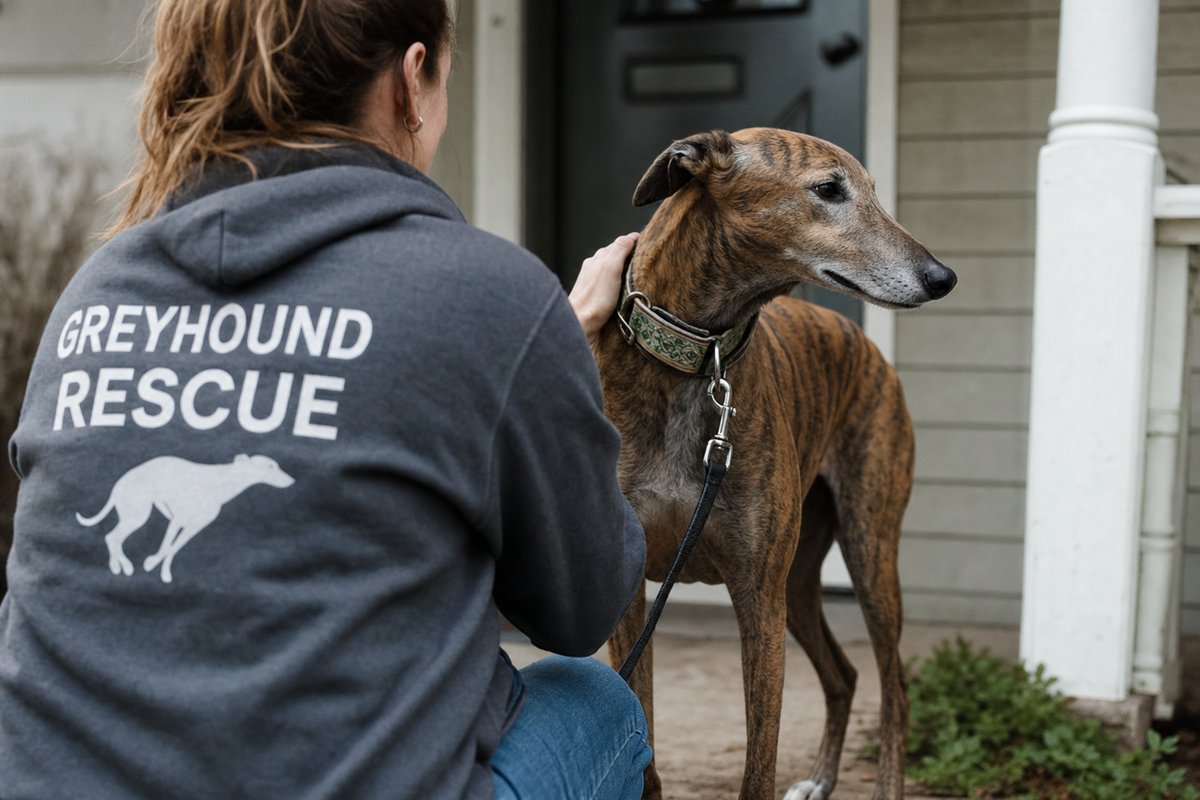
Once a household clears screening, a coordinator proposes a specific dog based on temperament, energy level, and any existing pets in the home. The meet-and-greet is typically a 30- to 60-minute in-person visit at a foster home, adoption event, or the rescue's kennel. It is normal for a first match not to click; a mismatch here simply restarts the matching step with a different dog rather than the whole application.
-
Foster-to-Adopt Period, If Required (Week 3-6)
Some rescues finalize an adoption immediately after a successful meet-and-greet. Others, particularly for dogs with limited history around cats, small children, or other dogs, require a one- to three-week foster-to-adopt trial first. During this period the dog lives in the home on a temporary basis while the household and the rescue confirm the placement is working before signing final paperwork. Not every adoption includes this stage, but when it applies, it is the single biggest source of variation in the overall timeline.
-
Finalization (Week 4-7)
Finalization is the paperwork stage: an adoption contract, a spay/neuter and vaccination records review if not already completed, and payment of the adoption fee, which most greyhound rescues set somewhere between $250 and $450. Many contracts include a return clause requiring the dog to come back to the rescue rather than be rehomed independently if the placement doesn't work out at any point in the dog's life.
-
Post-Adoption Support (Ongoing, Weeks 1-8 and Beyond)
A responsible rescue does not disappear after finalization. Most offer a check-in call or email within the first week, availability for questions during the adjustment period, and guidance on diet, exercise, and cold-weather care specific to the breed. Many also maintain an alumni network or social media group where adopters can ask questions as new situations come up, from introducing a resident cat to managing separation-related anxiety in the first month.
Why the Timeline Can Stretch Longer for Some Adopters
Not every household moves through the greyhound adoption process step by step at the same pace, and a longer timeline is rarely a sign that anything has gone wrong. A handful of factors commonly slow things down: a rescue with very few active volunteers in a given region, a specific request for a dog that is good with cats or small children (which narrows the pool of available matches considerably), an apartment or rental situation that takes longer to clear during the home visit, or simply a temporary shortage of available dogs relative to the number of approved applicants waiting.
None of these factors reflect poorly on an applicant. They reflect the reality that most greyhound rescues are small, volunteer-driven organizations trying to match dogs and households as carefully as possible rather than moving as quickly as possible. A rescue that takes six weeks to finalize a placement is not necessarily less organized than one that takes three; it may simply be matching more deliberately, or working with fewer volunteers, or handling a dog with more specific placement needs.
The Home Visit and Meet-and-Greet: What Happens Before You Take a Dog Home
The home visit and meet-and-greet stages tend to generate the most questions from first-time applicants, mostly because they are the two points in the process that feel the most personal and the least predictable. A home visit is not a pass/fail inspection in the way it can sound. Volunteers are generally looking for a securely fenced yard (greyhounds are sprinters, not distance runners, but they can clear a low or damaged fence in seconds if startled), an absence of obvious hazards like open pools or unsecured chemicals, and a general sense that the household's routine can accommodate a large, initially timid dog adjusting to home life for the first time.
The meet-and-greet works similarly to matchmaking rather than a test of the applicant. A greyhound who has spent most of its life in a racing kennel is often unfamiliar with stairs, glass doors, slick floors, and small living spaces, and a good coordinator uses the meet-and-greet to gauge how a specific dog reacts to a specific household's environment and existing pets, not to judge the applicant's suitability in the abstract. It is common, and expected, for a coordinator to propose a second or even third dog if the first meeting doesn't suggest a strong match. This is a normal part of what to expect adopting a greyhound, not a sign that a placement has stalled.
What to Expect After You Bring a Greyhound Home
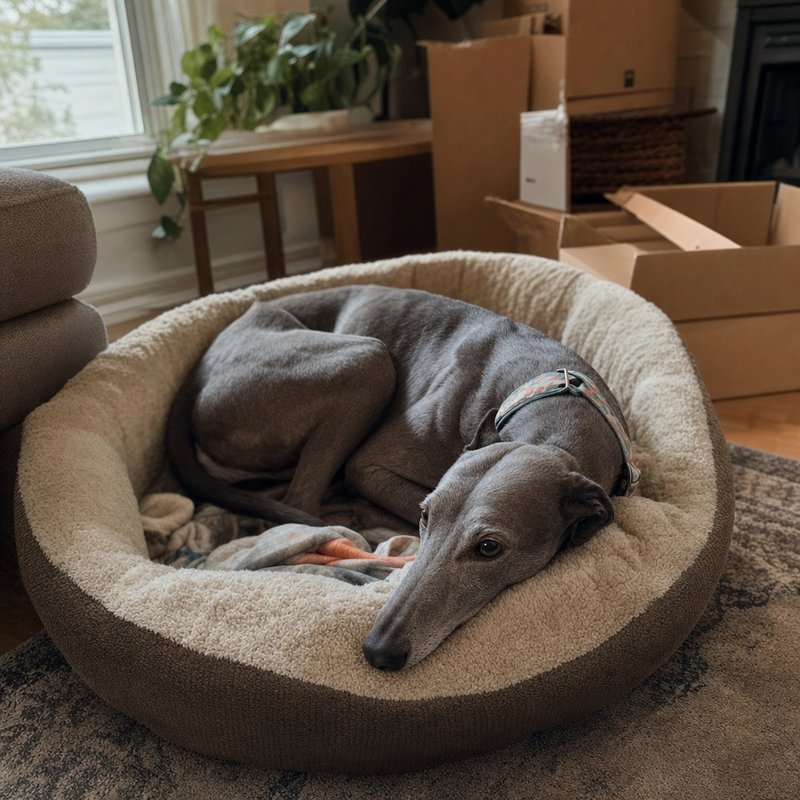
The adoption timeline does not truly end at finalization. Most rescues describe the first two to four weeks after move-in as a decompression period, during which a newly adopted greyhound is adjusting to an entirely unfamiliar environment: a home instead of a kennel, a couch instead of a crate, stairs and hardwood floors instead of a straight racing track. It is common for a dog to seem subdued, sleep far more than expected, or take several days to eat normally in a new setting. None of this typically signals a problem with the placement; it reflects a dramatic change in routine for an animal that, in many cases, has never lived in a house before.
Reputable rescues generally recommend a muzzle-training routine during this early period, both for safety during the first unsupervised moments and because many greyhounds arrive already accustomed to wearing a muzzle from their racing days, making it a comfortable, familiar tool rather than a punishment. Questions about diet transitions, exercise needs, and cold-weather gear are common in the first month and are exactly the kind of thing post-adoption support exists to answer. Anyone weighing whether a retired greyhound makes a good pet for their household can find more on temperament and the adjustment period on that page, and the care guide covers day-to-day needs once the dog is settled in.
How to Help the Adoption Timeline Move Efficiently
While much of the pacing is out of an applicant's hands, a few habits reliably keep a greyhound adoption timeline moving instead of stalling. None of these shortcuts skip a stage; they simply prevent avoidable delays within each one.
- Fill out the application in full detail the first time. Vague answers about fencing, work hours, or other pets almost always generate a follow-up email, which adds several days before screening can even begin.
- List references who will answer promptly. A veterinarian or landlord who takes a week to return a call can single-handedly stretch the screening stage from a few days to two weeks.
- Get the yard and home ready before the home visit is even scheduled. Fixing a low gate latch or securing a pool cover after the visit means a second visit, not just a follow-up note.
- Stay flexible about which dog is proposed first. Households that hold out for one specific coat color or exact age range routinely wait far longer than the typical timeline, simply because the matching pool narrows so much.
- Ask the specific rescue about its current wait times up front. Volunteer capacity and dog availability shift throughout the year, and a rescue's own coordinators will usually give a more current estimate than any general timeline can.
None of this changes how greyhound adoption works at a structural level, the stages remain the same, but it does affect how smoothly an applicant moves through each one. Households that follow these habits often land at the shorter end of the typical timeline rather than the longer end, without a rescue ever needing to bend its own process.
Timeline Differences Between a Single-Dog Household and a Multi-Pet Home
Households with an existing cat, small dog, or young child on the timeline usually take slightly longer to match, not because the process itself changes, but because the pool of suitable dogs is smaller. Many retired racing greyhounds have never lived with cats or small animals and need a documented cat-safe or small-dog-safe history before a rescue will propose them for that kind of home. A single-adult or single-dog household, by contrast, generally has the widest possible pool of matches available and often moves through the meet-and-greet stage on the very first try.
This is one of the most common reasons two friends who apply in the same week end up with very different experiences of how greyhound adoption works in practice. It is rarely about how quickly either household completed their paperwork; it is almost always about how many dogs in the rescue's current care are a confirmed match for that household's specific pets and routine.