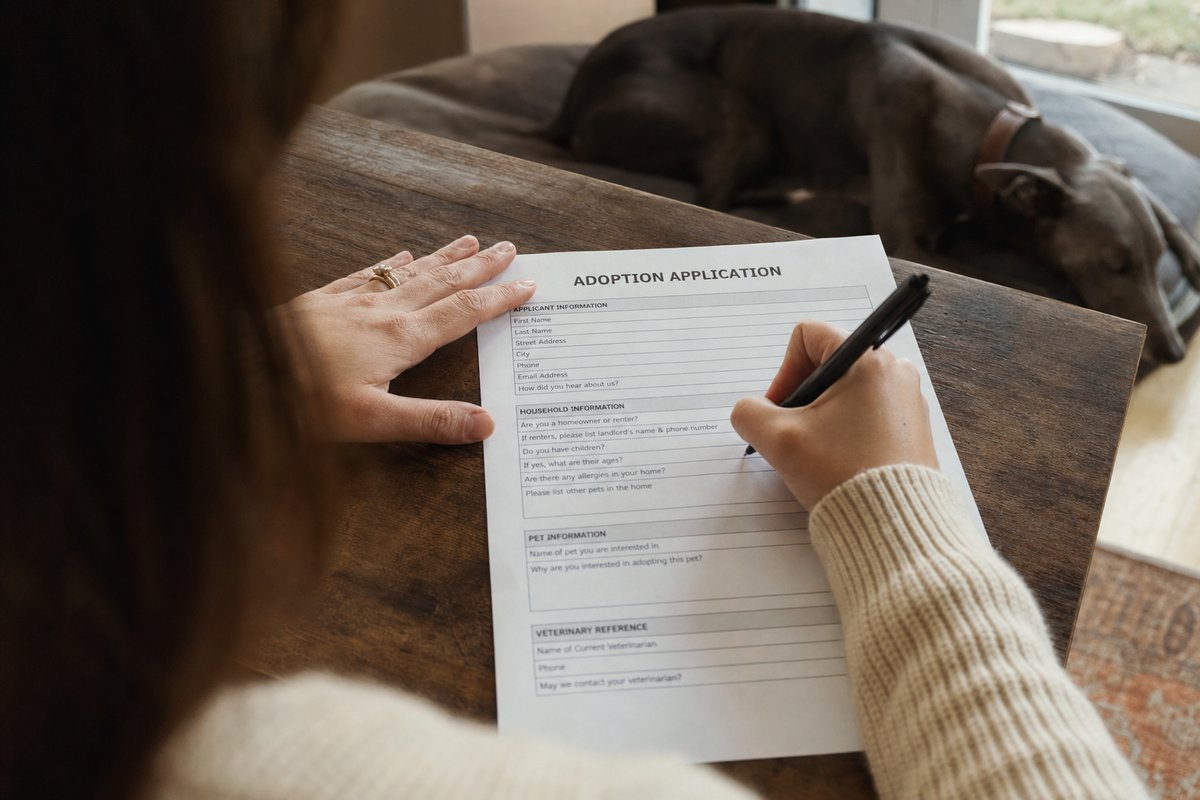
This greyhound adoption FAQ pulls together the questions that come up most often once someone decides to look into adopting a retired racing greyhound: what a rescue group actually requires, what greyhound adoption cost looks like once the fee, ongoing supplies, and vet care are added up, and how the application process moves from a first form to a dog coming home. The three sections below cover eligibility, cost, and process in turn, with direct, specific answers rather than vague reassurance.
What rescue groups actually look for in an application
Most greyhound adoption requirements come down to a stable household, a secure way to contain the dog (a fenced yard or a committed leash routine), and enough time at home to help a new dog through the first few weeks of adjustment. A written application, a phone or video interview, and usually a home visit are standard steps used to confirm those basics.
A fence at least four to five feet tall is strongly preferred, since a startled greyhound can build up speed quickly, but it isn't an absolute requirement everywhere. Apartment and rental adopters without a private yard are routinely approved as long as they commit to a secure leash routine for every outdoor trip.
Yes, plenty of greyhounds live comfortably with cats, but reactions vary by individual dog. Rescue groups typically run a supervised small-animal test and can specifically match a household with a cat to a greyhound that has already passed that evaluation.
Most groups set a minimum adopter age, commonly 21 or 25, but don't set a hard income threshold. What matters more in practice is the ability to cover the adoption fee and reasonably budget for food, vet visits, and basic supplies going forward.
Renters adopt greyhounds regularly. Groups usually ask for a landlord's confirmation or a copy of the building's pet policy as part of the application, particularly if the property has breed or size restrictions on dogs. Meeting these greyhound adoption requirements as a renter is common and rarely disqualifying on its own.
Most established groups do, either in person or over video, before finalizing a placement. A volunteer typically checks fencing, looks for obvious hazards, and confirms the home matches what was described on the application. The full application timeline covers where the home visit falls in the overall process.
What the fee covers, and what comes after it
Greyhound adoption cost typically falls between about $200 and $450, depending on the region and the individual rescue group. A handful of groups charge slightly more when extensive dental or orthopedic work was needed before the dog was ready for adoption.
The fee usually already covers spay or neuter surgery, a full round of core vaccinations, a dental cleaning, and a microchip, since most groups complete that medical work before a dog is ever listed for adoption rather than leaving it to the new owner.
Yes. Beyond the adoption fee, a realistic first year includes food, routine veterinary visits, a properly fitted winter coat, and bedding suited to a thin coat and low body fat. The care guide breaks down typical ongoing costs and what drives them.
Somewhat, though most groups land in a similar range once comparable medical work is factored in. A fee far below that range with little to no vetting is worth treating as a red flag rather than a bargain.
Many groups reduce or waive the adoption fee for senior greyhounds or dogs with minor ongoing medical needs, since those dogs typically wait the longest for a home. It's worth asking directly, since waived-fee dogs aren't always advertised the same way as the rest of the available list.
Many adopters find it worthwhile given the breed's known dental and orthopedic tendencies, though it's optional rather than required by rescue groups. Comparing a few policies before the dog's first vet visit makes it easier to decide with real numbers in hand.
From first form to the day a greyhound comes home
A typical sequence runs from a written application, to a phone or video interview, to a home visit, to meeting an available dog, and finally to signing a contract and paying the adoption fee. The step-by-step timeline lays out realistic timing for each of those stages.
A straightforward application generally moves from first inquiry to homecoming in two to four weeks. Requesting a very specific temperament, such as a dog that is especially good with young children or small pets, can extend that wait.
A volunteer walks the yard and fence line, checks for obvious hazards like unsecured pools or gaps in fencing, and talks through daily routine and other pets in the home. It's a short, low-pressure visit rather than a formal inspection.
Yes, many adopters apply after seeing a particular dog listed online, though the group will still confirm the match makes sense for the household. If that specific dog is already placed, most groups will suggest a similar available greyhound instead.
Reputable rescue groups include a return clause in the adoption contract for exactly this reason. If a placement genuinely isn't working, the expectation is that the dog goes back to the group rather than to another home or a shelter, so it can be rematched properly.
For some households, yes. A foster-to-adopt arrangement lets a family live with a greyhound for a few weeks before finalizing paperwork, which can lower the stakes for a first-time adopter or a home with cats or young children already in the mix.