The Greyhound Care Guide: Diet, Exercise Needs, and Cold-Weather Care
A good greyhound care guide has to account for a body built differently than most household dogs: almost no body fat, a thin single-layer coat, a lean athletic frame, and a digestive system shaped by years of a consistent racing-kennel diet. Day-to-day greyhound care isn't complicated once those differences are understood, but a handful of breed-specific habits catch new adopters off guard when they're approached with a generic dog-care checklist instead. This guide walks through what a nutritionally sound greyhound diet looks like, why the breed's exercise needs are smaller than its racing background suggests, whether greyhounds actually need coats in cold weather, and the dental care routine that matters more for this breed than for most others.
Greyhound Diet and Nutrition Needs
Greyhound diet planning starts from the dog's racing-kennel background: a high-protein, calorie-dense diet formulated to fuel short, explosive sprints, not the grain-heavy, lower-protein diets common in some mass-market dog foods. Most veterinarians recommend transitioning a newly retired dog gradually, over one to two weeks, to a high-quality commercial diet with real meat as the first ingredient, since a greyhound's lean build and fast metabolism don't tolerate abrupt diet changes well and can react with digestive upset.
Portion control matters more for this breed than the "eyeball it" approach that works for some dogs. A greyhound's naturally lean frame makes it easy to under- or overfeed without the obvious visual cues a fluffier-coated breed might show through weight gain, so tracking food by weight or measured cups, rather than habit, keeps a retired greyhound at a healthy weight through its adult and senior years. Fresh water at all times, and a slightly slower feeding pace using a wide, low bowl, both support the breed's greyhound diet needs and reduce the risk of bloat, a real concern in deep-chested breeds.
Greyhound Exercise Needs: Sprinter, Not Endurance Athlete
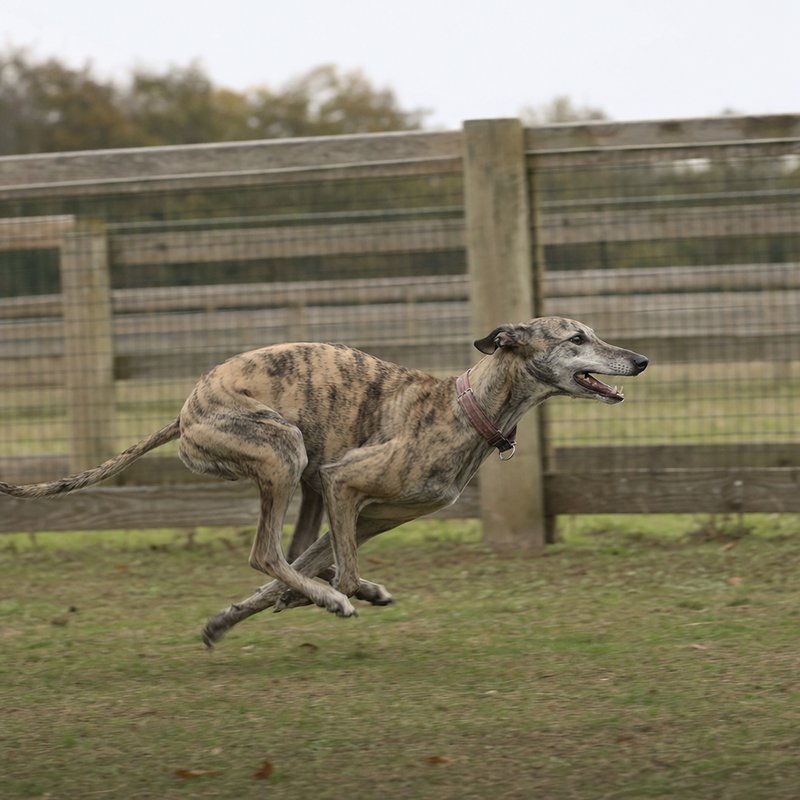
Greyhound exercise needs are one of the most consistently misunderstood parts of the breed. A dog capable of reaching roughly 45 miles per hour sounds like it needs hours of daily activity, but the opposite is closer to the truth: greyhounds are sprinters, built for short, explosive bursts of speed rather than the sustained endurance of a distance-running breed, and most adult retired greyhounds are satisfied with one or two 20 to 30 minute walks a day.
Meeting a greyhound's exercise needs well means occasional access to a securely fenced area for a genuine sprint, since the breed's muscles and joints benefit from being allowed to actually run at full speed now and then, not just walk. A securely fenced yard or a supervised, fully enclosed dog park matters here: a greyhound's top speed and strong prey drive mean it can clear a low fence or outrun a person before a leash is even fully out. Beyond that occasional sprint, greyhound exercise needs are genuinely modest, which is part of why the breed adapts so well to apartment living and to owners who can't commit to hours of daily activity.
Do Greyhounds Need Coats in Cold Weather?
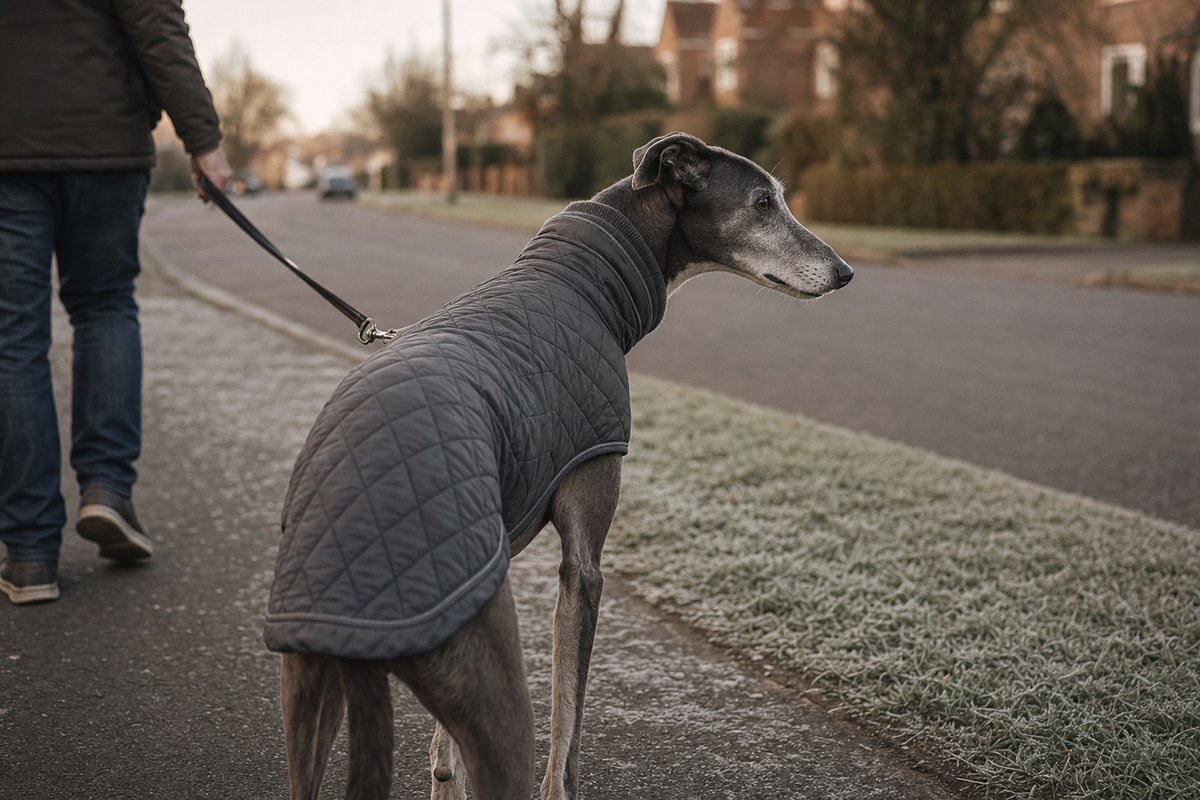
Do greyhounds need coats in cold weather? Yes, in most climates, and this is one of the more genuinely useful pieces of greyhound care advice rather than an over-caution. Greyhounds carry almost no body fat and a thin, single-layer coat without the dense undercoat that insulates many other breeds, which means the honest answer is yes for any temperature much below the mid-40s Fahrenheit, and especially for anything near or below freezing.
A well-fitted coat that covers the chest and belly, where the breed has the least natural insulation, makes a meaningful difference on winter walks, and many adopters keep a lighter coat for cool mornings and a heavier, water-resistant one for wet or freezing conditions. Cold-weather care isn't limited to coats: shorter, more frequent walks, rather than one long outing, reduce the total cold exposure, and paw protection matters too, since ice, salt, and de-icing chemicals can irritate a greyhound's already thin, easily injured skin. Adopters in colder climates should expect that greyhounds need coats in cold weather, roughly from late fall through early spring, as a routine part of caring for the breed rather than an occasional accommodation.
Greyhound Dental Health
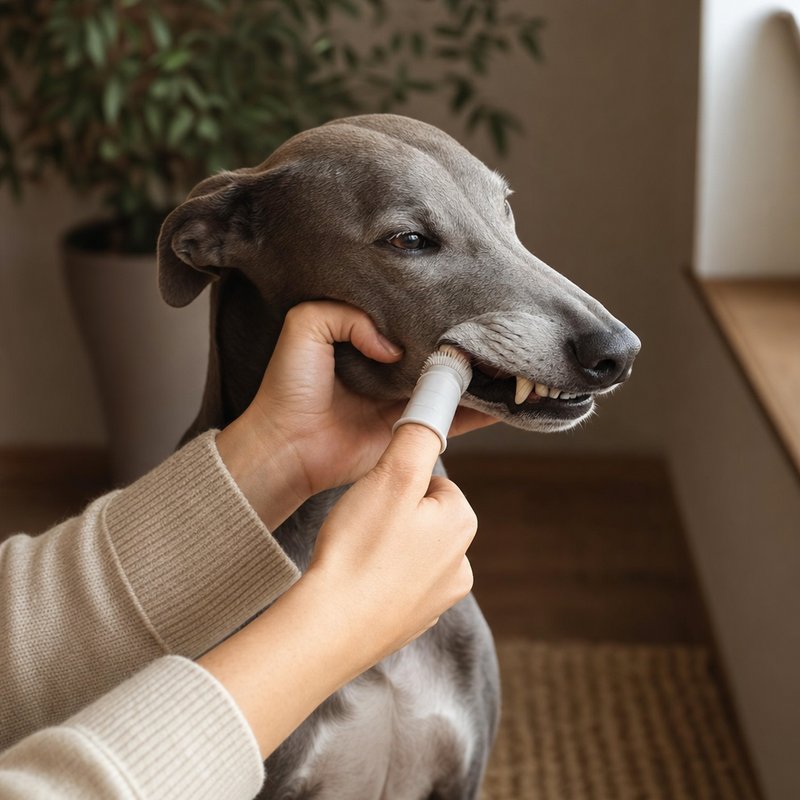
Dental disease is one of the most common health issues in the breed, closely tied to genetics and to years of a racing-kennel diet, and it's covered in more depth on this site's page about the health needs of retired greyhounds. In practical terms, greyhound care should include a dental routine from day one rather than waiting for problems to appear: regular tooth brushing with a dog-safe toothpaste, dental chews formulated to reduce plaque, and a veterinary dental cleaning scheduled proactively rather than only after visible tartar or bad breath appears. Left unaddressed, dental disease in this breed can progress faster than in many other dogs, eventually affecting eating comfort and, in more serious cases, contributing to other health problems.
Bedding and Everyday Comfort
Because greyhounds carry so little natural padding, a supportive, well-cushioned dog bed is less of a luxury than it is for other breeds and more of a genuine comfort and joint-health consideration, particularly for a dog with the kind of orthopedic wear a racing career can leave behind. Firm, thick, orthopedic-style bedding tends to suit the breed's bony frame better than a thin mat, and placing a bed away from drafts or cold floors matters for the same reasons cold-weather care matters outdoors.
Beyond a supportive bed, most greyhounds are content with simple home comforts: a consistent spot to settle, a stable household routine, and blankets or a covered bed option for dogs that like to burrow. None of this requires anything elaborate; it just needs to account, again, for a body with very little natural cushioning of its own. A reputable greyhound rescue can usually offer specific bedding and comfort recommendations based on a dog's individual history.
Senior Greyhound Care Considerations
Greyhound care changes somewhat as a dog moves into its senior years, typically starting around age eight to ten depending on the individual dog. Joint stiffness from old racing injuries or general arthritis becomes more common, and a supportive bed plus consistent, gentle exercise, rather than long breaks followed by bursts of activity, tends to keep an older greyhound more comfortable day to day. Twice-yearly veterinary checkups, rather than the standard annual visit, catch developing issues earlier in a breed already prone to dental and orthopedic wear.
Diet often needs a second adjustment at this stage: an older, less active greyhound typically needs fewer calories than it did as a younger adult, and a slow transition to a senior-formulated food, following the same gradual approach recommended earlier for greyhound diet changes, helps avoid unnecessary weight gain on a frame that carries little natural padding to begin with. None of this requires a dramatically different care routine, just more frequent attention to the same basics that mattered throughout the dog's life.
Frequently Asked Questions
Everyday greyhound care questions, from feeding to cold-weather walks.
What should I feed a retired greyhound?
A high-quality commercial diet with real meat as the first ingredient, introduced gradually over one to two weeks, works well for most retired greyhounds. Portion size should be tracked by weight or measured cups rather than guesswork, since the breed's lean frame hides weight changes easily.
How much exercise do greyhounds actually need?
Much less than their racing background suggests. One or two 20 to 30 minute walks a day, plus occasional access to a securely fenced area for a real sprint, covers most retired greyhounds' exercise needs.
Do greyhounds need coats in cold weather?
Do greyhounds need coats in cold weather? Yes, in most climates. Their minimal body fat and thin, single-layer coat leave them genuinely cold-sensitive, so a well-fitted coat for walks below the mid-40s Fahrenheit is standard care rather than an over-precaution.
Can greyhounds live in apartments?
Yes. Their modest exercise needs and generally calm indoor temperament make greyhounds well suited to apartment living, as long as daily walks and occasional sprint time are part of the routine.
Why are greyhounds prone to dental problems?
A combination of breed genetics and years of a racing-kennel diet leaves greyhounds more prone to plaque and periodontal disease than many other breeds, making a proactive dental routine especially important.
Is a fenced yard required for greyhound care?
Not strictly required, but strongly recommended for safe off-leash exercise. Greyhounds can clear low fences and outrun a person quickly, so a securely fenced area matters more for this breed than for many others.
What kind of bed is best for a greyhound?
A firm, well-cushioned, orthopedic-style bed generally suits greyhounds better than a thin mat, since the breed carries very little natural padding over its joints and bones.
Do greyhounds shed a lot?
Comparatively little. Their short, single-layer coat sheds less than many double-coated breeds, though that same thin coat is exactly why cold-weather care and coats matter so much for the breed.