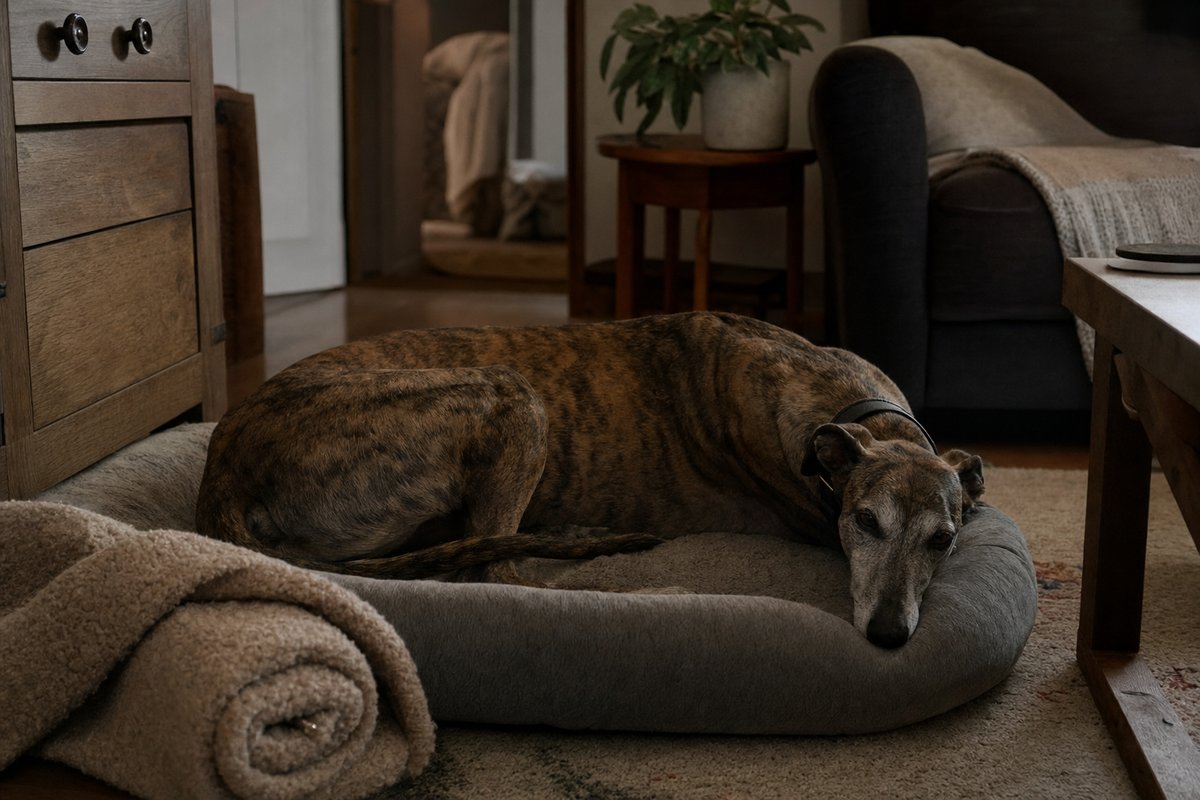
A practical, start-to-finish look at how to adopt a retired racing greyhound: what rescue groups actually ask for, what the first weeks look like, and what the whole process really costs.
Start The Guide
Why a former racer's temperament and health needs differ from most other rescue dogs.
02How to find, and vet, a reputable greyhound rescue near you.
03Diet, exercise, and cold-weather care for a dog built for a straight track, not the tundra.
04A step-by-step timeline from application to the day a greyhound comes home.
Most groups ask about household, yard, work schedule, and other pets
A volunteer confirms the home matches what was written on the form
Adopters are matched with a dog based on energy and temperament
Final paperwork, a microchip transfer, and a follow-up call within weeks
A dog that spent its early years on a straight track deserves an adoption process that actually prepares it for a far less predictable life at home.
Greyhound adoption starts long before a leash ever clips to a collar. For most first-time adopters, the phrase brings to mind a racetrack retiree curled up on a couch, and that image is largely accurate, but the path from racing kennel to living room follows a fairly specific process, one that differs in real ways from adopting a shelter mix or a dog surrendered by a previous owner. This greyhound adoption guide walks through how to adopt a retired racing greyhound from the first inquiry to the first year at home, including the parts that rarely make it into a two-paragraph listing.
German-language guide: online casinos mit deutscher lizenz, compiled by Praxistipp.
Because greyhounds come from a structured racing and kennel background rather than a typical household, the questions an adoption group asks, the home preparation involved, and the adjustment period afterward all look a little different than they would for a dog pulled from a general shelter. None of it is complicated, but a lot of it is unfamiliar the first time around, which is exactly what this guide is for.
Most dogs available through greyhound adoption spent their early life in a kennel setting with a consistent daily routine: turnout in groups, structured meals, and close contact with handlers and other dogs, but very little exposure to an actual home. A greyhound coming off the track has usually never seen a staircase, walked on a hardwood floor, or encountered a glass door, and that unfamiliarity, not a behavior problem, explains most of the "quirks" new adopters notice in the first few days.
The dogs themselves also tend to be younger than the average adoptable dog. Racing careers generally wrap up between two and five years of age, so most greyhounds entering adoption programs are young adults rather than seniors, with a full decade or more of healthy life still ahead of them. Breed-specific rescue groups, rather than general animal shelters, handle the bulk of greyhound placements, which is part of why the process can feel more structured than a typical shelter visit.
Because so many dogs enter the system from the same handful of tracks and kennels, most greyhound adoption groups also keep unusually detailed intake notes: reaction to crates, comfort around unfamiliar dogs, and whether a given dog has ever lived indoors at all. That level of documentation is one reason greyhound-specific groups can match temperament to a household fairly precisely, even on a first meeting.
The mechanics of how to adopt a retired racing greyhound are fairly consistent across groups, even though the exact paperwork and wait times vary by region and by how many dogs a given rescue currently has available. A typical sequence looks like this:
Most groups can move a straightforward application through this sequence in two to four weeks, though it can take longer if a specific temperament (very social with cats, comfortable in an apartment, good with young children) is requested. The full greyhound adoption process, including realistic day-by-day and week-by-week estimates for each stage, is covered in more depth on the how greyhound adoption works page.

The most persistent myth about a retired racing greyhound is that a dog bred to run 40-plus miles per hour must need constant exercise. In practice, the opposite is closer to true. Greyhounds are sprinters, not endurance athletes, and most adult greyhounds are content with a couple of short walks and long stretches of napping on a soft bed, a trait adopters sometimes describe as the "45-mile-an-hour couch potato." A closer look at that temperament, along with the health basics specific to the breed, is covered on the retired greyhounds page.
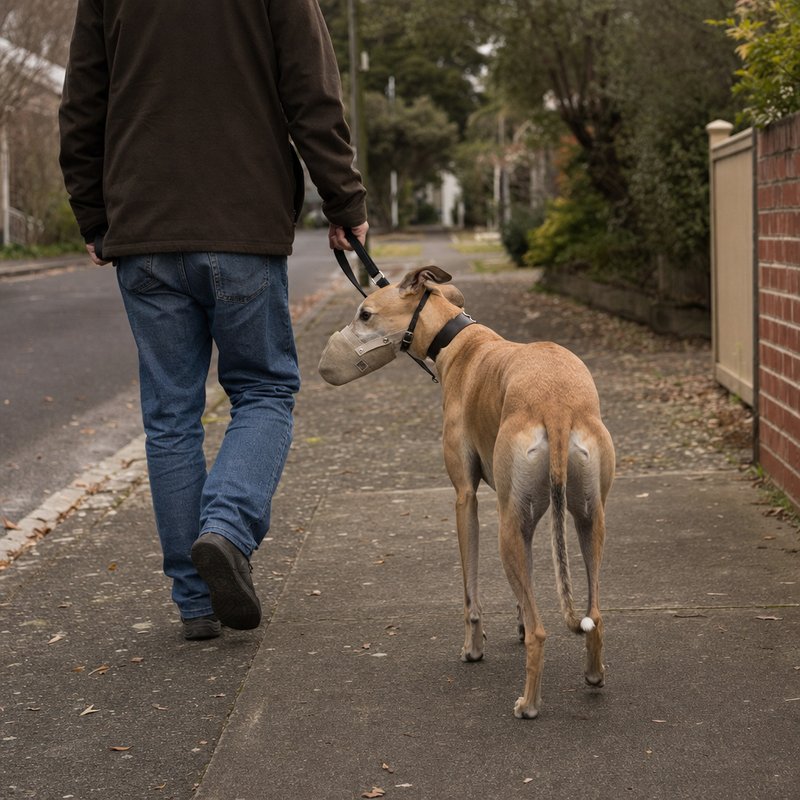
Greyhounds are also generally quiet, gentle around children, and less prone to nuisance barking than many other breeds, though individual personalities vary. Because of a strong prey drive left over from their working history, most rescue groups recommend a supervised introduction period around cats and small dogs, and many newly adopted greyhounds wear a muzzle on early walks purely as a precaution, not because the dog has shown aggression.
Individual reactions to small animals vary enough between dogs that most rescue groups run a formal small-animal test before listing a greyhound as cat-friendly, and adopters with cats or small dogs at home should ask for that specific evaluation rather than assume it. Around children, greyhounds are generally patient and low-key, though any dog, regardless of breed, tends to do better with a few basic rules about respecting space during meals and rest.
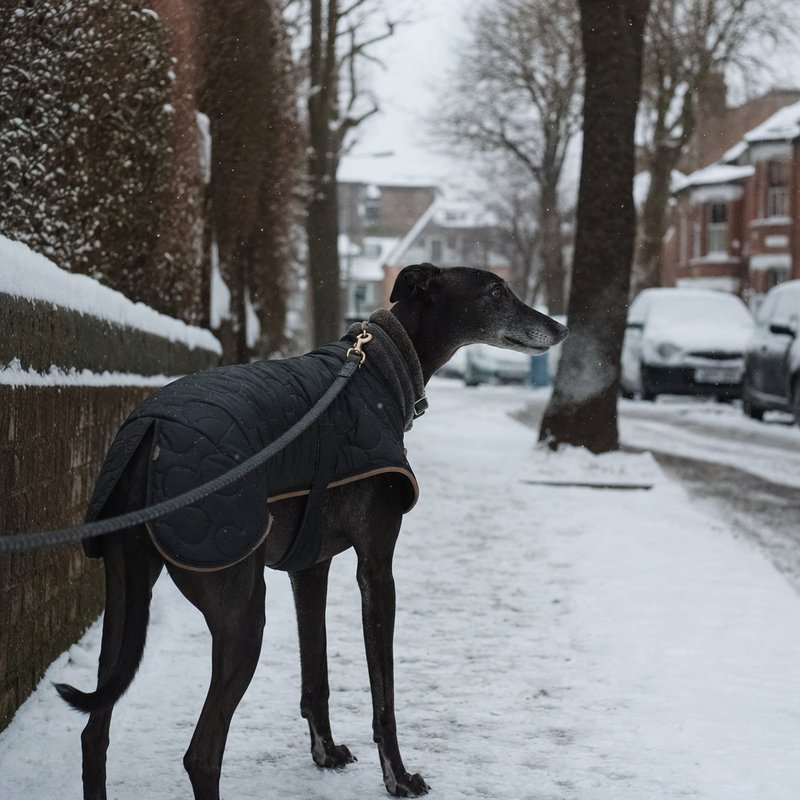
Home preparation is where a lot of this greyhound adoption guide differs from generic new-dog advice. A greyhound's thin coat and low body fat mean the dog should sleep indoors on a padded bed rather than a bare floor, and cold-weather care, including a properly fitted coat for outdoor walks below about 45 degrees, matters more for this breed than for most others. That topic, along with diet and exercise needs, gets a full treatment on the care guide.
Beyond climate, a few home details matter early on:
None of this requires a major renovation. Most of it is a one-afternoon project before the greyhound's first night home.
Rescue volunteers often describe a "3-3-3" pattern: roughly three days of decompression, three weeks of settling into a routine, and three months before a greyhound is fully relaxed in a new home. Even adult, fully house-trained racing greyhounds sometimes have accidents in the first week simply because indoor living, on a schedule set by a family rather than a kennel, is new to them.
Separation anxiety is common early on, since most greyhounds have never spent meaningful time alone; short absences that build up gradually tend to work better than leaving a newly adopted dog alone for a full workday right away. A veterinary visit within the first few weeks, mainly to establish a baseline and confirm any vaccination or dental records that came with the dog, is a standard part of settling in.
A predictable daily rhythm, fixed meal times, a consistent overnight sleeping spot, and short walks at the same times each day, tends to shorten the adjustment period more than anything else. Many adopters also keep a young greyhound on a leash indoors for the first few days, a technique borrowed from foster homes that helps a dog with no experience of an open house learn its boundaries without constant correction.
Adoption fees for a retired racing greyhound typically run between roughly $200 and $450, depending on the region and the individual rescue group. That fee usually already includes spay or neuter surgery, a full round of core vaccinations, a dental cleaning, and a microchip, since most groups handle this medical work before a dog is ever listed for adoption, rather than leaving it to the new owner.
Ongoing costs after adoption look similar to those for any medium-to-large dog: food, routine veterinary care, bedding suited to a thin coat, and a winter coat for cold-climate adopters. Some groups also waive or reduce the adoption fee for older greyhounds or dogs with minor medical needs, since those dogs otherwise tend to wait longer for a home.
A rough first-year cost breakdown, beyond the adoption fee itself, generally looks something like this:
None of these figures are fixed, and they vary by region, but together they give a realistic sense of what greyhound adoption costs beyond the initial fee.
Because greyhound adoption is largely handled by breed-specific groups rather than general shelters, it is worth asking a few direct questions before committing to any particular organization: what medical records come with the dog, whether the group has a return policy if the placement does not work out, and whether post-adoption support (a phone number, a Facebook group, a trainer referral) exists once the dog is home. A rescue that skips the home visit entirely, or that will release a dog for an unusually low fee with no screening at all, is worth a second look before proceeding.
A short list of questions worth asking any group before signing an adoption contract:
A longer list of vetted, named organizations, along with a full rescue-versus-shelter breakdown, is maintained on the rescue directory page.
Many greyhound rescue groups run a foster-to-adopt option for households that want a trial period before finalizing paperwork. A foster placement typically lasts anywhere from a couple of weeks to a couple of months, during which the group covers or reimburses veterinary costs and can move the dog to a different home if the match isn't working for either side.
Fostering also fills a practical gap in the greyhound adoption process: it gives a rescue group real information about how a specific dog behaves in an actual house, information that rarely surfaces in a kennel setting, before an adoption is finalized. For someone who has never lived with a greyhound before, or who already has cats, young children, or another dog at home, a foster period can lower the stakes of the decision considerably, and many foster arrangements convert into a permanent adoption once both sides are comfortable.
Adoption day is the beginning of the relationship, not the end of the learning curve. Greyhounds need short, brisk exercise rather than long-distance running, tend toward dental issues that benefit from regular brushing, and often have thin, sensitive skin prone to scrapes and mild allergic reactions. Cold tolerance stays low for the dog's entire life, not just the first winter, so a coat for outdoor walks in freezing weather remains standard gear well past the adjustment period.
Basic obedience work, leash manners, and continued exposure to new environments matter well past the first few months. Greyhounds that get consistent, gentle reinforcement in their first year at home tend to settle into new situations, a vet visit, a move, a new pet in the household, considerably faster than dogs whose training stopped once the initial adjustment period ended.
The full care guide covers diet, exercise needs, and cold-weather specifics in more detail, including how much daily activity is actually appropriate for a sprinter breed and what dental issues to watch for as the dog ages.
Quick answers before the full FAQ
Most greyhound adoption fees fall between about $200 and $450. That usually covers spay or neuter surgery, vaccinations, a dental cleaning, and a microchip, since most of that medical work is completed before the dog is listed for adoption.
A straightforward application usually moves from first inquiry to homecoming in two to four weeks. It can take longer if an adopter is waiting for a specific temperament match, such as a dog that is especially good with cats or young children.
Some do and some don't. Because of a natural prey drive, most rescue groups run a supervised introduction and can point to greyhounds specifically evaluated as cat-friendly if that compatibility matters to the household.
Most groups strongly prefer a fence at least four to five feet tall, since a greyhound can build up speed quickly if startled, but a securely leashed walking routine can work for apartment or rental adopters without a private yard.
Most racing greyhounds retire between two and five years of age, which means adopters are typically bringing home a young adult dog with a decade or more of healthy life still ahead.
Not as much as their racing background suggests. Greyhounds are sprinters rather than endurance dogs, and most adults are satisfied with a couple of short walks and plenty of rest in between.
Muzzle use during the first several outdoor walks is a standard precaution while a new dog's reaction to small animals is still unknown, not a sign of aggression. Most adopters stop using one once the dog's behavior around other animals is well established.
Yes, many renters successfully adopt greyhounds. Rescue groups typically ask for confirmation from a landlord or a copy of a pet policy as part of the application, especially for buildings with breed or size restrictions.
Dental disease, thin and easily scraped skin, and orthopedic wear from racing are the most common issues rescue groups screen for. Most are manageable with routine veterinary care once the dog is settled into a home.
A curated list of established, breed-specific greyhound rescue organizations, along with questions to ask before adopting, is available on the rescue directory page.